2011-11-11
| 00:15 | leo2007 | how does `lein run' work? |
| 00:18 | technomancy | leo2007: it finds the given -main function and applies it to the arglist you supply |
| 00:18 | leo2007 | technomancy: thanks. |
| 00:21 | technomancy | sure |
| 00:25 | cemerick | it was only a matter of time, I guess: https://twitter.com/#!/fakerichhickey |
| 00:27 | leo2007 | technomancy: what happens when `lein swank'? |
| 00:28 | bhenry | leo2007: lein help swank |
| 00:29 | leo2007 | I want to know how it is done? |
| 00:29 | leo2007 | because I might need to tweak it. |
| 00:30 | leo2007 | for example, I want it to start a http server too. |
| 00:35 | bhenry | leo2007: https://github.com/technomancy/swank-clojure/blob/1.3.x/src/leiningen/swank.clj |
| 00:38 | leo2007 | bhenry: thanks |
| 00:57 | leo2007 | technomancy: How can I teach lein swank to also starts a http server? I am on a noir project. |
| 00:57 | tensorpudding | i think that is what lein-noir does |
| 00:57 | tensorpudding | not sure |
| 00:58 | technomancy | leo2007: typically what's done is to just launch the swank server, then go into your server.clj file and run (future (-main)) in the repl |
| 00:58 | technomancy | you may be able to automate it to run when the swank server launches though; lemme see |
| 00:58 | leo2007 | technomancy: thanks. |
| 00:59 | technomancy | if you put :repl-init-script "launch.clj" in project.clj and have launch.clj contain (require 'myapp.server) (myapp.server/-main) that might do it |
| 01:00 | leo2007 | is :repl-init-script deprecated? |
| 01:00 | technomancy | hm... it may be; I think :repl-init is preferred |
| 01:00 | leo2007 | I used :repl-init to load the server namespace. |
| 01:00 | technomancy | yeah, that will load the code but not call the -main function for you |
| 01:02 | leo2007 | Then, is it normal to call -main in server.clj? |
| 01:03 | technomancy | it's typically avoided since it's nice to be able to load a file like that without having any side-effects |
| 01:04 | technomancy | but this is a good use case arguing in the opposite direction |
| 01:04 | technomancy | hmmm |
| 01:04 | leo2007 | technomancy: or if :repl-inti can accept a form to eval |
| 01:05 | technomancy | yeah, that would work too |
| 01:05 | duck1123 | I prefer to have my -main launch both the http and swank servers. That way lein run gives me everything I need |
| 01:05 | technomancy | I could probably come up with a better solution except it's nearly 1am here |
| 01:06 | technomancy | duck1123: yeah, that is especially nice if you're using swank in production |
| 01:06 | technomancy | then you can just use lein run |
| 01:07 | leo2007 | ok, for now I will use the second method. |
| 01:07 | duck1123 | It's also nice because then all my namespaces are required and ready for C-c M-p |
| 01:08 | leo2007 | some people put the dependency as [swank-clojure "1.4.0-SNAPSHOT"] some as [org.clojure/swank-clojure "1.4.0-SNAPSHOT"] |
| 01:08 | leo2007 | what are the differences? |
| 01:08 | duck1123 | the first is right |
| 01:08 | cemerick | there's an org.clojure/swank-clojure?! |
| 01:09 | duck1123 | cemerick: probably in someone's local repository |
| 01:10 | leo2007 | how to find out the group-id? |
| 01:10 | leo2007 | duck1123: see sample.project.clj |
| 01:10 | duck1123 | swank-clojure is the same as swank-clojure/swank-clojure |
| 01:11 | leo2007 | what is group-id? |
| 01:11 | technomancy | cemerick: I accidentally squatted on org.clojure when clojars first launched |
| 01:13 | cemerick | these things happen ;-) |
| 01:13 | technomancy | especially in a mosh pit |
| 01:14 | duck1123 | It would probably make sense to go through and update the example dependencies to the latest stable-ish versions |
| 01:15 | leo2007 | technomancy: why isn't swank-clojure defaults to clojure 1.3.0? |
| 01:16 | technomancy | leo2007: clojure 1.3.0 didn't exist when swank was released |
| 01:16 | duck1123 | leo2007: if you want 1.3, do lein swank in the context of a project with 1.3 declared |
| 01:17 | leo2007 | ok |
| 01:17 | leo2007 | just curious. |
| 01:17 | duck1123 | outside of a project, lein swank is going to use whatever lein is using |
| 01:18 | duck1123 | as a side note, be careful of dev dependencies that want to use 1.3 |
| 01:21 | leo2007 | duck1123: thanks |
| 01:25 | leo2007 | another annoyance is that defproject is available? this makes it difficult to see its doc-string while tweaking. |
| 01:27 | duck1123 | I'm not sure I understand what you mean |
| 01:30 | leo2007 | for example, I launch the swank server, connect to it and defproject is not available. |
| 01:31 | duck1123 | is it when you start swank outside of a project? |
| 01:32 | duck1123 | I suppose I modify the project so infrequently, and then in such common ways that that has never bothered me |
| 01:33 | duck1123 | the swank server runs with the project's code with the projects clojure, so the class path doesn't include leiningen or it's dependencies |
| 01:34 | leo2007 | duck1123: I can live with it. |
| 01:35 | leo2007 | Can http://clojuredocs.org/ produce documentation in info format for use in emacs? |
| 01:37 | duck1123 | It's not quite the same, but you can C-c C-d C-d on a var to get it's docs |
| 01:43 | leo2007 | alright. |
| 02:48 | leo2007 | duck1123: do you use fuzzy completion in slime? |
| 02:54 | leo2007 | which seems broken for me. |
| 03:40 | Blkt | good morning everyone |
| 04:15 | clgv | hmm I cant view Chris Houser's slides (svg) with a normal image viewer. thats weird. what program are they supposed to be viewed with? can't we have them as pdf? |
| 04:18 | clgv | exporting them as pdf via inkscape doesnt work :/ |
| 04:21 | clgv | ok firefox works when opening it manually |
| 04:29 | aperiodic | question: is it possible to find the "cycle" fn using lazybot's findfn? |
| 04:30 | aperiodic | how do i specify i want my output to be infinite and lazy? |
| 04:32 | jli | aperiodic: use lazy-seq. as for infinite, well, that depends on how you write your function. |
| 04:32 | tomoj | it's not possible |
| 04:36 | aperiodic | jli: not how to write such a function, how to find one that has those properties using lazybot |
| 04:37 | tomoj | how would you specify the desired infinite seq? and if you could, how could lazybot check for equality? |
| 04:37 | jli | aperiodic: you could look at functions in clojure.core that return infinite sequences: repeat, repeatedly, iterate |
| 04:37 | jli | cycle |
| 04:38 | jli | range |
| 04:38 | aperiodic | tomoj: yeah, you're right. i guess it would take some sort of metadata on the fn |
| 04:38 | tomoj | if it were more sophisticated maybe you could ask it to find a function such that (take 10) of the result is equal to some literal coll |
| 04:39 | aperiodic | yeah, that's how i test it in the repl |
| 04:39 | aperiodic | it's not a huge deal, i was just curious |
| 04:41 | aperiodic | or if you could comp the fns that are being searched? |
| 04:42 | aperiodic | that wouldn't be too hard to do, and would probably have other benefits besides |
| 04:44 | Borkdude | How are the neat clean slides at clojure_conj being made?\ |
| 04:46 | clgv | Borkdude: you may find out when you have a look at the properties view of your pdf reader- Stuart Sierra used Keynote it seems |
| 04:49 | Borkdude | ah right, keynote |
| 04:49 | Borkdude | I'm messing around now with the beamer package and latex |
| 04:50 | clgv | Borkdude: I often user latex+beamer as well |
| 04:50 | clgv | *use |
| 04:51 | Borkdude | clgv: what do you use for code highlighting? |
| 04:51 | clgv | Borkdude: I didn't do any code related talks. |
| 04:53 | Borkdude | I use minted for it, it works quite well (also for Clojure) |
| 04:53 | clgv | gotta look that up |
| 04:55 | clgv | Borkdude: the output looks nice. whats your experience with it? |
| 04:56 | Borkdude | I have started to use it in normal documents and slides |
| 04:56 | Borkdude | works better than the other listings package I think |
| 04:57 | Borkdude | I mean, it has better highlighting, but it might be less stable, haven't run into any issues though |
| 04:58 | clgv | ah, it's working with the -shell-escape option to call pygments |
| 04:58 | Borkdude | clgv: yes |
| 05:09 | clgv | Borkdude: I'll keep that one in mind. |
| 05:10 | tsdh | technomancy: Would you mind adding slime-complete-symbol to completion-at-point-functions in clojure-mode if that's bound? Then TAB completes if indentation is already correct if tab-always-indent is set to 'complete, exactly like in emacs-lisp-mode. |
| 05:48 | algal | Speaking of clojure-mode keybindings, it's currently violating the emacs guidelines by binding (kbd "C-c t") to clojure-jump-test. Since C-c [key] is expressly reserved for the user. But such is life… SLIME is also an offender there. |
| 05:48 | nybbles | hello, does anyone know where i can find an up-to-date video or resource for setting up my clojure dev env so i get useful stack traces? |
| 05:49 | nybbles | on emacs.. with slime repl and leiningen and all that stuff |
| 05:49 | nybbles | i mean i have slime and leiningen already installed :) |
| 05:49 | algal | nybbles: Our own technomancy had a shout-out for something called clj-stacktrace ( http://technomancy.us/154 ), but that's all I know about it. |
| 05:52 | nybbles | algal: thanks! hopefully i can find what i need there |
| 05:52 | algal | np |
| 06:01 | nybbles | so it looks like clj-stacktrace only works from lein repl.. does anyone know how to get it working in the slime repl? |
| 06:01 | nybbles | i.e. if i connect to a server started with lein swank |
| 07:26 | lnostdal | isn't deftype something isa? can work with? |
| 07:26 | lnostdal | or, i mean, i have a deftype that implements several protocols .. "is" not that deftype one of those protocols? |
| 07:26 | lnostdal | any one* |
| 07:44 | tsdh | lnostdal: Yes, isa? should work with deftypes. |
| 07:44 | lnostdal | ok, what about protocols? .. is it possible to determine what protocols something implements?` |
| 07:49 | tsdh | lnostdal: Oh wait, I was wrong. (isa? MyTypeExtendingMyProt MyProt) actually returns false |
| 07:49 | tsdh | lnostdal: It works for interfaces, though. |
| 07:56 | babilen | lnostdal: Are you looking for extends? |
| 08:01 | raek | there is also 'satisfies?' |
| 08:02 | raek | ,(class Runnable) |
| 08:02 | clojurebot | java.lang.Class |
| 08:02 | raek | ,(defprotocol Foo) |
| 08:02 | clojurebot | #<Exception java.lang.Exception: SANBOX DENIED> |
| 08:03 | raek | anyway: (class Foo) => clojure.lang.PersistentArrayMap |
| 08:03 | raek | Foo doesn't evaluate to a class |
| 08:04 | raek | lnostdal: anyway, you want to use satisfies? to check whether you can call the protocol methods on an instance |
| 08:08 | technomancy | nybbles: getting clj-stacktrace in slime would mean hacking up swank-clojure, which nobody's done yet. |
| 08:09 | technomancy | tsdh: good call |
| 08:12 | Borkdude | I have a project structure like this: src/twitter-utils/core.clj and test/twitter-utils/{core.clj,fixtures.clj}.I am interactively running through the tests from core.clj, which is requiring fixtures.clj, but it complains it cannot find it. |
| 08:13 | Borkdude | I'm using lein swank |
| 08:13 | Borkdude | and emacs with slime-connect |
| 08:14 | Borkdude | I'm sorry, the test dir is test/twitter-utils/test/... |
| 08:16 | Borkdude | I'm getting: Could not locate twitter_utils/test/fixtures__init.class or twitter_utils/test/fixtures.clj on classpath: |
| 08:16 | Borkdude | |
| 08:17 | clgv | Borkdude: try prepending "test." |
| 08:18 | raek | Borkdude: where the namespace name has a - in it, the corresponding file path should have a _ |
| 08:19 | raek | Borkdude: rename the twitter-urils/ directory to twitter_utils/ |
| 08:21 | Borkdude | raek: it is already named thusly |
| 08:21 | Borkdude | also the test dir is on the classpath and the core.clj can be found properly |
| 08:21 | Borkdude | only fixtures.clj which is on the same level cannot be found somehow |
| 08:22 | Borkdude | I hope it's not smth stupid like a typo |
| 08:22 | raek | what does the require form look like? |
| 08:24 | raek | (:require twitter-utils.test.fixtures) ? |
| 08:25 | raek | Borkdude: also, did you create the test directory _after_ you started the clojure instance? |
| 08:25 | Borkdude | raek: https://gist.github.com/1357979 |
| 08:26 | Borkdude | raek: no, the directory was already there and I have restarted lein swank just to be sure |
| 08:28 | raek | and the path to the fixture file is "test/twitter_utils/test/fixtures.clj"? |
| 08:29 | Borkdude | What the hell, I'm sorry... it's fixed. Smth stupid like I assumed. |
| 08:41 | tsdh | technomancy: thx |
| 09:44 | TimMc | Borkdude: What was the problem? |
| 09:44 | TimMc | I mean, the solution. |
| 09:57 | Borkdude | TimMc: too embarrasing |
| 09:57 | TimMc | Then how will anyone else learn from your mistake? |
| 09:57 | Borkdude | Is it possible in Midje to see the actual value instead of just true or false from a fact, when using some provided clausules?\ |
| 09:57 | Borkdude | TimMc: ok, but don't laugh |
| 09:58 | TimMc | I've made so many stupid mistakes with build systems, I can guarantee this isn't worse. |
| 09:58 | Borkdude | TimMc: I guarantee this one is worse |
| 09:58 | TimMc | ok |
| 09:58 | TimMc | wrong machine? |
| 09:58 | Borkdude | TimMc: I forgot to save the emacs buffer to an actual file on disk... |
| 09:58 | TimMc | Oh man, happens to me all the time. |
| 09:59 | Borkdude | Really? What a relief ;) |
| 10:01 | TimMc | Borkdude: I've been in the wrong directory, or haven't *exported* the shell variables I set, or not pulled down the latest source... |
| 10:02 | clgv | is there any way to tell if a java class is a defrecord? |
| 10:02 | TimMc | Real examples from the past two months. |
| 10:04 | TimMc | clgv: Nothing official I think. |
| 10:06 | clgv | the kryo serialization gets an hiccup with it, since it implements IMap but does not support put |
| 10:09 | TimMc | #{clojure.lang.ILookup java.lang.Object java.io.Serializable clojure.lang.IPersistentCollection clojure.lang.IPersistentMap clojure.lang.IMeta clojure.lang.Counted java.util.Map java.lang.Iterable clojure.lang.Seqable clojure.lang.IObj clojure.lang.IKeywordLookup clojure.lang.Associative} |
| 10:09 | TimMc | (Used ancestors on a defrecord.) |
| 10:11 | clgv | well, then you could say if it is a Map & IPersistentMap & IObj but non of the clojure maps then it is a defrecord |
| 10:16 | TimMc | Most likely, but not for sure. |
| 10:16 | clgv | hmm, I'll have to handle that differently :/ |
| 10:16 | TimMc | You can tell it is a Clojure object of some sort, of course. |
| 10:16 | TimMc | clgv: What's the serialization problem? |
| 10:17 | clgv | by default it tries to call .put on a defrecord |
| 10:23 | algal_ | Hello, Clojurians. Has anyone here had good/bad experiences trying to use Clojure + Google App Engine + Vaadin? |
| 10:23 | algal_ | I can see there's an old github project for this ( https://github.com/tlipski/appengine-magic-vaadin ) but it seems little-followed and a bit out of date. |
| 10:27 | biallym | I can't seem to find any information on using native libraries, let alone packaging them (specifically JOGL, the rencent ones, not the ones on java.net) |
| 10:27 | Raynes | $karma amalloy |
| 10:27 | biallym | Any pointers? |
| 10:27 | lazybot | amalloy has karma 19. |
| 10:28 | clgv | $karma Raynes |
| 10:28 | lazybot | Raynes has karma 7. |
| 10:31 | tensorpudding | what's a native library? |
| 10:32 | TimMc | (inc Raynes) |
| 10:32 | lazybot | ⇒ 8 |
| 10:33 | TimMc | (dec lazybot) |
| 10:33 | lazybot | ⇒ 1 |
| 10:33 | clgv | tensorpudding: a binary library e.g. compiled from c/c++ which can be used via JNI |
| 10:33 | TimMc | (catching up) |
| 10:33 | clgv | (inc Raynes) |
| 10:33 | lazybot | ⇒ 9 |
| 10:33 | clgv | (dec TimMc) |
| 10:33 | lazybot | ⇒ 3 |
| 10:33 | clgv | ;) |
| 10:33 | TimMc | haha |
| 10:33 | TimMc | clgv: Why does it try to call put? |
| 10:33 | TimMc | deserialization? |
| 10:34 | tensorpudding | oh |
| 10:34 | clgv | yes. I do investigate what information a custom serializer gets right now |
| 10:34 | TimMc | clgv: How does it handle Java's unmodifiable maps? |
| 10:35 | clgv | TimMc: whats their name? |
| 10:35 | TimMc | clgv: Dunno. http://download.oracle.com/javase/1.4.2/docs/api/java/util/Collections.html#unmodifiableMap%28java.util.Map%29 |
| 10:36 | TimMc | clgv: Maybe the answer is to have Clojure defrecords do their own serialization. |
| 10:36 | clgv | reading the javadoc of Map I guess not welol ;) |
| 10:38 | gfredericks | karma's back up? |
| 10:40 | TimMc | $karma gfrederick s |
| 10:40 | lazybot | gfrederick s has karma 0. |
| 10:40 | TimMc | urgh |
| 10:40 | biallym | I have the native libraries in the structure described by some of the blog posts about the native-deps plugin (which I can't seem to get working). I just don't know who to package it >.> |
| 10:40 | TimMc | I meant to put the zwnbsp in there, not the nbsp. |
| 10:40 | gfredericks | $karma gfredericks |
| 10:40 | lazybot | gfredericks has karma 4. |
| 10:41 | gfredericks | oh nice |
| 10:41 | gfredericks | (inc Raynes) |
| 10:41 | lazybot | ⇒ 10 |
| 10:41 | gfredericks | TimMc: you're a terrible person. |
| 10:42 | clgv | it's so silent in the conj channel. nothing interesting happening over there? |
| 10:42 | biallym | (I also come from a lisp background not a Java background so I'm learning as I go |
| 10:42 | bhenry | clgv the internet sucks at the conj |
| 10:43 | lucian | biallym: if you want GL, lwjgl is a one-stop shop |
| 10:43 | raek | biallym: I think support for native-deps is included in leiningen nowadays |
| 10:43 | lucian | biallym: if you're interested in a C FFI, the easy one is JNA. JNI is the code-generation-sucky one |
| 10:45 | biallym | lucian: lwjgl doesn't provide all the functions I want to use. jogl has a much more up to date set of bindings, closer to what I want |
| 10:45 | TimMc | gfredericks: This is true. |
| 10:45 | lucian | biallym: right |
| 10:46 | biallym | raek: oh well that would explain some things >.> |
| 10:46 | lucian | biallym: i wasn't sure if you wanted to write a binding or just use one |
| 10:46 | biallym | lucian: I want to use a binding that doesn't assume I only want to do basic operations |
| 10:48 | lucian | biallym: if you want to change JOGL or lwjgl, you'll have to much about with Java and w/e they generate for the other JNI side |
| 10:49 | biallym | lucian: I don't want to change them I just want to package them >.> |
| 10:50 | biallym | and my attempts so far have failed miserably |
| 10:50 | lucian | i see |
| 10:50 | lucian | they're hard to package in general, even without clojure |
| 10:53 | biallym | I was under the impression I could just use the java ones and arange them into a package that is easier to use as a dependency |
| 10:53 | lucian | you should be able to, yes |
| 10:57 | andrewclegg | yo. what's the idiomatic way to get just the nth item in a sequence? |
| 10:57 | TimMc | nth |
| 10:57 | andrewclegg | oh :-) |
| 10:58 | TimMc | :-) |
| 10:58 | andrewclegg | thanks |
| 11:08 | babilen | technomancy: Include the up-to-date version of lein-pkg ... In particular the one that fixes #647632 (with clojure-contrib in SHARE_JARS (for plugins) |
| 11:08 | technomancy | babilen: oh, good point |
| 11:09 | TimMc | technomancy: You said that you're waiting until lein 2.0 to default to 1.3? |
| 11:09 | TimMc | (in project.clj files) |
| 11:09 | technomancy | TimMc: I actually went ahead and bumped it already. |
| 11:09 | TimMc | haha, OK |
| 11:10 | clgv | TimMc: custom serialization with reflection did the trick :) |
| 11:10 | TimMc | DOes that mean that lein repl outside a project will be 1.3? |
| 11:10 | technomancy | TimMc: oh, sorry; I meant for new project.clj files |
| 11:10 | TimMc | OK, but not the vanilla repl? |
| 11:10 | technomancy | right |
| 11:11 | TimMc | got it |
| 11:11 | babilen | technomancy: http://paste.debian.net/144832/ is what will be shipped in the next upload (once Daigo gets around to upload it) -- Are there other differences to your lein-pkg than clojure-contrib? |
| 11:12 | technomancy | babilen: I'll need to check to make sure all my bin/lein changes that are relevant get ported |
| 11:12 | babilen | technomancy: yeah, we should synchronise that :-/ |
| 11:16 | technomancy | babilen: it shouldn't be too bad |
| 11:17 | TimMc | technomancy: Is the repl/new project version difference on purpose, or is it just that you bumped one and not the other? |
| 11:17 | technomancy | TimMc: I can't upgrade Leiningen's Clojure version without breaking tons of existing plugins. |
| 11:18 | technomancy | lots of plugins use monolithic contrib |
| 11:18 | TimMc | Ah, the project-less repl is run from lein's own JVM? |
| 11:18 | technomancy | yeah |
| 11:18 | TimMc | maybe it should run from a special "singleton" porject |
| 11:18 | technomancy | or you could create a singleton project |
| 11:18 | TimMc | or maybe I should drop a project.clj in my ~ |
| 11:19 | technomancy | running in lein's JVM is significantly faster to start |
| 11:19 | TimMc | hmm |
| 11:19 | TimMc | Because then only one JVM has to start? |
| 11:19 | technomancy | yup |
| 11:33 | technomancy | babilen: pushed changes to bin/lein-pkg |
| 11:42 | babilen | technomancy: Looks good |
| 11:43 | technomancy | babilen: I'll try to do a few tests on my sid vm before tagging the release |
| 12:24 | ibdknox | those have been around for a long time |
| 12:25 | biallym_ | Warcraft 3 had a cool editor kinda like that |
| 12:25 | biallym_ | made it really easy to make custom games in it |
| 12:25 | ibdknox | lego mindstorms had a similar interface as well |
| 12:26 | biallym_ | We also use that language specifically in our "Cool stuff about CS class" |
| 12:26 | ibdknox | though there were many attempts to build real structured editors over the years |
| 12:26 | ibdknox | for general purpose programming |
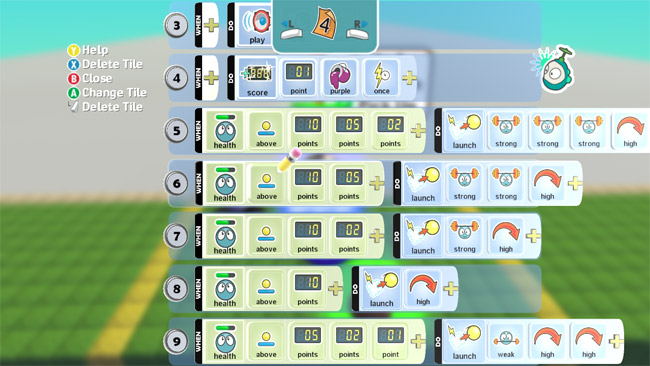
| 12:26 | technomancy | dpritchett: see also http://www.istartedsomething.com/wp-content/uploads/2009/07/kodu6.jpg |
| 12:26 | ibdknox | none of them were very successful |
| 12:26 | dpritchett | i love the idea of scratch, i was just disheartened by the manual list iteration |
| 12:27 | dpritchett | is that something a 9 year old needs to worry about? |
| 12:27 | ibdknox | haha |
| 12:27 | ibdknox | yeah |
| 12:27 | biallym_ | I would say warcraft 3's was successful |
| 12:27 | ibdknox | biallym_: sorry, I meant general purpose ones |
| 12:27 | dpritchett | My daughter is 4.5 and I've been wondering how/if to teach her these things. I don't necesarily want her to grow up to be a dev like me but I think she could at least stand to learn logic. |
| 12:28 | licenser | ibdknox: have you had experience with the closure GUI elements and cljs? |
| 12:28 | biallym_ | Yea I know what you meant, just saying, in certain circumstances they have been |
| 12:28 | ibdknox | licenser: no, I've never liked components |
| 12:28 | ibdknox | biallym_: I have no doubt, I suspect in the right domains they're really awesome :D |
| 12:29 | biallym_ | I think seesaw is an exccellent idiomatic clojure gui library if you were looking for one |
| 12:29 | licenser | so self coding everything? |
| 12:29 | biallym_ | yea warcraft 3 also let you put in arbitrary ECMA script |
| 12:29 | biallym_ | at any point |
| 12:29 | ibdknox | licenser: for designed websites, that's all you can do :) |
| 12:29 | biallym_ | if it had the idea of a macro it would have been even cooler |
| 12:30 | licenser | ibdknox: heh |
| 12:32 | mjwhitt | dpritchett: I think there are multiple aspects to getting kids interested in programming, logic is good, being comfortable using computers, and the understanding that a computer is a tool that you can control... then you need inspiration - ideas of what you want to make it do for you |
| 12:32 | gtrak`` | when I was 8, I drew a bunch of concentric circles in qbasic and was fascinated by the moire effect, started by looking at the gorilla.bas and nibbles.bas code |
| 12:32 | dpritchett | I'm also not sure what the right age to expose her to these things might be. She can't quite read yet and she is doing single-digit addition, I don't exactly want to toss programming at her just yet. |
| 12:32 | duck1123 | I got my son playing around with irb as a way to play with math and numbers. I figured I could go from there |
| 12:33 | dpritchett | She does have a little solar calculator that she likes, and we did a "typing in pico" session once just for fun. |
| 12:33 | technomancy | I let my son type in full-screen Emacs because there's nothing for him to click on to accidentally close it or mess it up. |
| 12:34 | mjwhitt | yeah, actually programming comes later... but you can lay the foundation for it earlier |
| 12:35 | gfredericks | my son puts everything in his mouth and soils his diapers. |
| 12:35 | dpritchett | She has a neat Rube Goldberg style game on the iPad, it's sort of like The Incredible Machine. This one's called "casey's contraptions" or something. |
| 12:35 | ibdknox | the incredible machine was so awesome |
| 12:35 | dpritchett | I like to think that will help her with cause and effect, physics, and construction. Maybe I should just get some building blocks instead. |
| 12:35 | mjwhitt | when I was a kid, learning math, my dad showed me bit by bit how binary worked, and I really enjoyed it |
| 12:36 | mjwhitt | I liked encoding secret messages in different bases |
| 12:36 | mjwhitt | I felt like a top secret spy, haha |
| 12:36 | mjwhitt | gfredericks: your son might be a bit young still ;) |
| 12:37 | gfredericks | mjwhitt: I successfully resisted trying to tie my previous comment in to emacs somehow. |
| 12:37 | mjwhitt | hehe |
| 12:37 | duck1123 | gfredericks: if you are on linux, check out GCompris. There are a couple really easy games for the really little ones. (hit the keys, move the mouse, etc.) |
| 12:38 | mjwhitt | mm, off to bbq lunch |
| 12:38 | gfredericks | duck1123: he still doesn't have enough precision to keep hold of an object for very long, but I suppose that will be relevant sooner than later |
| 12:39 | tensorpudding | how do i get bignums? |
| 12:39 | TimMc | tensorpudding: +', *', etc. |
| 12:39 | TimMc | tensorpudding: Or do you mean literals? |
| 12:40 | gfredericks | &(type 123N) |
| 12:40 | lazybot | ⇒ clojure.lang.BigInt |
| 12:40 | TimMc | ,(class 42N) |
| 12:40 | TimMc | bah |
| 12:40 | clojurebot | clojure.lang.BigInt |
| 12:40 | duck1123 | ,(map class [1N 1M]) |
| 12:40 | clojurebot | (clojure.lang.BigInt java.math.BigDecimal) |
| 12:40 | tensorpudding | okay, N was what i want |
| 12:40 | gfredericks | isn't there a syntax for BigInteger as well? |
| 12:40 | gfredericks | ,(prn (new BigInteger "239")) |
| 12:40 | clojurebot | 239 |
| 12:40 | gfredericks | hrm |
| 12:40 | TimMc | gfredericks: c.l.BigInt replaces j.m.BigInteger |
| 12:40 | tensorpudding | is there docs for literals somewhere |
| 12:41 | TimMc | tensorpudding: the reader |
| 12:41 | TimMc | clojure.org/reader I think |
| 12:41 | gfredericks | TimMc: it doesn't do everything though... |
| 12:41 | tensorpudding | i thought that only documented the other reader macros |
| 12:41 | tensorpudding | ' ` ~ @ ~@ etc. |
| 12:41 | TimMc | tensorpudding: It is *supposed* to document all the syntax. |
| 12:42 | TimMc | but it is not complete. |
| 12:42 | tensorpudding | it just refers to Integer.parseInt() |
| 12:42 | tensorpudding | it mentions M for making BigDecimals i guess |
| 12:43 | TimMc | Ugh, so out of date. |
| 12:44 | biallym_ | So I come from lisp land and have never used java (just C++) quick syntax check "new InterfaceClass { public blah functionName (blah) {code} }" is an anonymous implementation correct? and the proxy macro is the solution for that |
| 12:45 | biallym_ | (solution for doing that in clojure) I am copying over some java code >.> |
| 12:47 | biallym_ | ok so yea I was right... I hate syntax |
| 12:48 | raek | biallym_: yes. proxy is suitable for this kind of java interop. |
| 12:52 | biallym_ | (inc raek) |
| 12:52 | lazybot | ⇒ 11 |
| 12:52 | biallym_ | hehe |
| 13:04 | duck1123 | Does this error make sense to anyone? lamina.core.pipeline.ResultChannel cannot be cast to lamina.core.pipeline.ResultChannel |
| 13:14 | TimMc | duck1123: That's usually a dirty JVM/compiled code issue. |
| 13:14 | Borkdude | biallym_: you are forgetting two ()'s |
| 13:15 | Borkdude | biallym_: new InterfaceClass() { public blah functionName (blah) |
| 13:15 | Borkdude | {code} } |
| 13:15 | TimMc | duck1123: Oh, and I've also encountered something similar when a bit of load-time code used a defrecord that hadn't been created yet. |
| 13:15 | Borkdude | any midje proficient people in here? |
| 13:15 | biallym_ | I don't program java so >.>. In lisp an extra set () rarely means anything :P |
| 13:16 | Borkdude | biallym_: in Lisp it means a lot, an extra function to be called most of the time ;) |
| 13:16 | duck1123 | TimMc: I'm doing a clean install to see if I still get it |
| 13:17 | biallym_ | nil and () are usually considered equal >.> |
| 13:17 | TimMc | duck1123: I'll see if I can dig up the error I was having. |
| 13:17 | TimMc | biallym_: not quite... |
| 13:18 | Borkdude | biallym_: not in clojure |
| 13:18 | Borkdude | &(= nil '()) |
| 13:18 | lazybot | ⇒ false |
| 13:18 | biallym_ | I know not in clojure, and I blame java for that, oh never mind I was making a bad joke anyways >.> |
| 13:19 | TimMc | duck1123: https://gist.github.com/899696 |
| 13:19 | tensorpudding | &(empty? nil) |
| 13:19 | lazybot | ⇒ true |
| 13:19 | tensorpudding | huh |
| 13:21 | tensorpudding | so nil isn't '() |
| 13:21 | tensorpudding | but it's a collection? |
| 13:21 | Borkdude | ,(doc empty?) |
| 13:21 | clojurebot | "([coll]); Returns true if coll has no items - same as (not (seq coll)). Please use the idiom (seq x) rather than (not (empty? x))" |
| 13:21 | brehaut | tensorpudding ##(coll? ()) |
| 13:21 | lazybot | ⇒ true |
| 13:21 | raek | () is the empty persistent list |
| 13:22 | duck1123 | ,(seq nil) |
| 13:22 | clojurebot | nil |
| 13:22 | Borkdude | ,(empty? \a) |
| 13:22 | clojurebot | #<IllegalArgumentException java.lang.IllegalArgumentException: Don't know how to create ISeq from: java.lang.Character> |
| 13:23 | Borkdude | ,(type nil) |
| 13:23 | clojurebot | nil |
| 13:23 | Borkdude | :) |
| 13:23 | tensorpudding | &(assoc nil :a 5) |
| 13:23 | lazybot | ⇒ {:a 5} |
| 13:23 | raek | ,(map class [() nil (conj () 1) (conj nil 1)]) |
| 13:23 | clojurebot | (clojure.lang.PersistentList$EmptyList nil clojure.lang.PersistentList clojure.lang.PersistentList) |
| 13:25 | biallym_ | so atleast nil is '() [If not the other way around) |
| 13:25 | Borkdude | ,(count nil) |
| 13:25 | clojurebot | 0 |
| 13:26 | tensorpudding | what's the difference between lazybot and clojurebot |
| 13:26 | Borkdude | biallym_: maybe the answer should be: in some ways yes, in others no |
| 13:26 | biallym_ | one likes fancy symbols? |
| 13:27 | biallym_ | Borkdude: yea I was talking from a more lisp standpoint, not clojure, I knew clojure had some funny stuff from other lisps going on there |
| 13:28 | Borkdude | biallym_: you mean a common lisp standpoint? |
| 13:28 | biallym_ | or scheme or arc |
| 13:29 | tensorpudding | most of the ways that clojure differs from the other lisps i've used, i rather like |
| 13:30 | Borkdude | biallym_: I'm sure you have read this? http://clojure.org/lisps |
| 13:30 | biallym_ | I like all the steps forwards, I can deal with the cost of some lisp idioms |
| 13:30 | brehaut | ,*clojure-version* |
| 13:30 | clojurebot | {:major 1, :minor 3, :incremental 0, :qualifier nil} |
| 13:30 | biallym_ | yes |
| 13:30 | biallym_ | &*clojure-version* |
| 13:30 | lazybot | ⇒ {:major 1, :minor 3, :incremental 0, :qualifier nil} |
| 13:36 | biallym_ | ,(ns-name *ns*) |
| 13:36 | clojurebot | sandbox |
| 13:36 | biallym_ | &(ns-name) |
| 13:36 | lazybot | clojure.lang.ArityException: Wrong number of args (0) passed to: core$ns-name |
| 13:36 | biallym_ | &(ns-name *ns*) |
| 13:36 | lazybot | ⇒ sandbox16763 |
| 13:36 | biallym_ | hmmm |
| 13:37 | brehaut | the main difference between clojurebot and lazybot is not the clojure support (though there is differences in the sandbox libraries used); its all the miscellanous extra bits |
| 13:37 | biallym_ | ,(all-ns) |
| 13:37 | clojurebot | (#<Namespace user> #<Namespace clojure.core> #<Namespace sandbox> #<Namespace clojure.repl> #<Namespace clojure.java.io> ...) |
| 13:37 | biallym_ | &(all-ns) |
| 13:37 | lazybot | ⇒ (#<Namespace cheshire.parse> #<Namespace lazybot.plugins.lmgtfy> #<Namespace lazybot.plugins.timer> #<Namespace clojure.set> #<Namespace lazybot.plugins.ping> #<Namespace cheshire.generate> #<Namespace clojure.tools.logging> #<Namespace clj-http.util> #<Namespace l... https://gist.github.com/1358799 |
| 13:37 | biallym_ | ok I like lazy better >.> |
| 13:38 | brehaut | given you can use and require namespaces, im not sure how thats relevant |
| 13:38 | tensorpudding | i guess lazybot has more modules |
| 13:39 | biallym_ | actually I was basing it off of the gist support for long quereys |
| 13:39 | brehaut | https://github.com/flatland/lazybot/ http://github.com/hiredman/clojurebot tensorpudding you can stop guess |
| 13:40 | brehaut | ing |
| 13:40 | biallym_ | And that reinforced my choice :p |
| 13:42 | biallym_ | how do you type hin the return of an fn? |
| 13:46 | brehaut | (fn ^type […] …) or (defn name ^type […] …) i believe |
| 13:48 | brehaut | biallym_: and use *warn-on-reflection* to find the locations where you need to type hint rather than guessing |
| 13:48 | brehaut | (lein has a project wide flag for it too) |
| 13:51 | biallym_ | yea it was an interface issue it was more to get the function to fit in the right hole (it expected a void return) |
| 13:51 | brehaut | you can always typehint an expression as needed too |
| 13:52 | brehaut | (.method obj ^type (foo bar)) |
| 13:52 | biallym_ | is there a way to do function types? |
| 13:53 | brehaut | biallym_: depends what you mean, and where you want to send the function |
| 13:54 | brehaut | biallym_: probably you want clojure.lang.IFn, or perhaps clojure.lang.Fn ? |
| 13:56 | brehaut | biallym_: if you mean like haskell or dotnet parametric function types then no, because they dont really exist in the jvm |
| 13:56 | biallym_ | hmm but is there a way to type that function? to say, I expect this value to be an fn that returns, say float or void |
| 13:56 | brehaut | i dont believe so |
| 13:56 | biallym_ | I'm more just playing with the limits clojure |
| 13:57 | biallym_ | limits of* |
| 13:57 | brehaut | thats a limit of the jvm i believe |
| 13:57 | biallym_ | How is that translating to clojure though? |
| 13:58 | biallym_ | Clojure's compiler is doing the type hinting why can't it type hint one of it's own types? |
| 13:58 | brehaut | biallym_: you can hint a specific function |
| 13:58 | biallym_ | but I can't type hint a variable of a function that is expected to be a function |
| 13:59 | biallym_ | (Beyond the knowledge that it is a function) |
| 13:59 | brehaut | im running out of my knowledge of the hinter |
| 14:00 | biallym_ | besides as I understand it, type hinting is only for optimization not for any sort of safety |
| 14:00 | brehaut | indeed |
| 14:01 | biallym_ | interesting |
| 14:02 | brehaut | unfounded assertion: static mutable types are a weaker invariant than dynamic but immutable types |
| 14:03 | brehaut | poor english aside |
| 14:04 | gfredericks | "dynamic" and "immutable" is a weird juxtaposition. |
| 14:05 | brehaut | gfredericks: i think i mean variables |
| 14:05 | gfredericks | i.e., programming is fun. |
| 14:05 | brehaut | ,(juxt dynamic immutable) |
| 14:05 | clojurebot | #<CompilerException java.lang.RuntimeException: Unable to resolve symbol: dynamic in this context, compiling:(NO_SOURCE_PATH:0)> |
| 14:07 | gfredericks | I've got half a mind and not enough time to add documentation to unk. |
| 14:25 | duck1123 | On the earlier subject of coding for kids: https://www.nytimes.com/2011/11/10/technology/personaltech/computer-programming-for-children-minus-cryptic-syntax.html?_r=1 |
| 14:25 | ibdknox | also this: http://cdsmith.wordpress.com/2011/09/10/haskell-for-kids-week-4/ |
| 14:33 | gfredericks | I want to test a macro that emits gen-class code. Do I need to do special stuff to make sure the generated class exists so I can test it? |
| 14:34 | gfredericks | (i.e., I would be testing a class that only would exists in the test code) |
| 14:35 | tensorpudding | don't teach kids lisp, they'll be scarred for life :P |
| 14:36 | duck1123 | tensorpudding: Do you really think so? If you raise your kids on lisp and functional programming, they'll never know any different. |
| 14:37 | tensorpudding | it was a joke |
| 14:38 | gfredericks | duck1123: with much wisdom comes much sorrow |
| 14:39 | TimMc | 'strue |
| 14:40 | TimMc | They'll be depressed. |
| 14:41 | jodaro` | i've tried to get my kids into a little ruby/python |
| 14:41 | jodaro | without much success heh |
| 14:41 | mefesto | kids raised on nothing but lisp and functional programming are spoiled |
| 14:41 | Borkdude | I've got this problem with Midje. I'm trying to test a function, with some prerequisites. But it actually executes the functions mentioned in 'provided' |
| 14:42 | Borkdude | Looks like this: https://gist.github.com/1358984 |
| 14:42 | duck1123 | "when I was your age, we had to number our lines by 10" |
| 14:42 | Borkdude | The test is in a different namespace btw, might it matter |
| 14:42 | Borkdude | duck1123: haha, indeed... GW Basic is how I started |
| 14:43 | gfredericks | What's wrong with (set! *compile-files* true)? |
| 14:43 | duck1123 | I still have my Atari XE. I had to leave it turned on because I had no way to save my programs |
| 14:45 | Borkdude | duck1123: is it still on? ;) |
| 14:46 | duck1123 | That would be insane. To have it still running my prime finder from high school |
| 14:47 | duck1123 | especially cosidering the number of times I've moved since then |
| 14:53 | gfredericks | duck1123: those primes would be worth a lot of money now |
| 14:55 | gfredericks | hmmm....maybe it's better to use a deterministic algorithm to get the unique symbols for a gen-class |
| 14:57 | mdeboard | $google sha-1 and java |
| 14:57 | lazybot | [JavaBlogging » SHA1 and MD5 checksums in Java] http://www.javablogging.com/sha1-and-md5-checksums-in-java/ |
| 14:57 | mdeboard | :o |
| 14:57 | seancorfield | is there a function that behaves like (fn [v fs] (map (fn [f] (f v)) fs)) ? |
| 14:58 | TimMc | seancorfield: juxt |
| 14:58 | ibdknox | seancorfield: ((apply juxt fs) v) |
| 14:58 | TimMc | yesssss |
| 14:58 | seancorfield | +1 TimMc |
| 14:59 | ibdknox | ,((apply juxt [even? odd? nil?]) 3) |
| 14:59 | clojurebot | [false true false] |
| 14:59 | seancorfield | that is certainly nicer than the basic map approach |
| 15:00 | ibdknox | non-lazy though |
| 15:00 | ibdknox | not sure if that matters |
| 15:00 | TimMc | mm |
| 15:01 | gfredericks | not hard to define lazy-juxt |
| 15:01 | seancorfield | and is there a function that behaves like (fn [v f] (f v)) ? |
| 15:01 | gfredericks | aka lust |
| 15:01 | gfredericks | seancorfield: #(%2 %1) |
| 15:01 | ibdknox | seancorfield: huh? |
| 15:02 | TimMc | ,(first ((juxt inc println) 4)) |
| 15:02 | clojurebot | 4 |
| 15:02 | clojurebot | 5 |
| 15:02 | adamh | win 7 |
| 15:03 | ibdknox | hm |
| 15:03 | ibdknox | so it *is* lazy? |
| 15:03 | ibdknox | no |
| 15:03 | ibdknox | &(first ((juxt inc println) 4)) |
| 15:03 | lazybot | ⇒ 4 5 |
| 15:04 | seancorfield | just playing with expressions and wanted something point-free |
| 15:05 | TimMc | (first ((apply juxt (conj (vec (repeat 500 inc)) println)) 4)) |
| 15:05 | TimMc | ,(first ((apply juxt (conj (vec (repeat 500 inc)) println)) 4)) |
| 15:05 | clojurebot | 4 |
| 15:05 | clojurebot | 5 |
| 15:05 | ibdknox | lol |
| 15:05 | TimMc | ugh |
| 15:05 | TimMc | (checking for chunked seqs) |
| 15:05 | ibdknox | yeah |
| 15:09 | TimMc | (letfn [(juxt [& fs] #(map (fn [f] (f %)) fs))] (first ((juxt inc println) 4))) |
| 15:09 | TimMc | ,(letfn [(juxt [& fs] #(map (fn [f] (f %)) fs))] (first ((juxt inc println) 4))) |
| 15:09 | clojurebot | 5 |
| 15:10 | TimMc | So... why isn't juxt lazy? |
| 15:10 | TimMc | $source juxt |
| 15:10 | lazybot | juxt is http://is.gd/QuCLxF |
| 15:10 | ibdknox | it says it returns a vector |
| 15:10 | TimMc | ah |
| 15:10 | ibdknox | ,(doc juxt) |
| 15:10 | clojurebot | "([f] [f g] [f g h] [f g h & fs]); Takes a set of functions and returns a fn that is the juxtaposition of those fns. The returned fn takes a variable number of args, and returns a vector containing the result of applying each fn to the args (left-to-right). ((juxt a b c) x) => [(a x) (b x) (c x)]" |
| 15:10 | TimMc | convenient for (into {}) |
| 15:10 | ibdknox | yep |
| 15:14 | TimMc | Oh, it is also optimized for 1â3 fnsor vals |
| 15:14 | ibdknox | TimMc: I'm confused by the results of your experimentation |
| 15:14 | ibdknox | that should have printed all of them out, right? |
| 15:14 | ibdknox | looking at the code for juxt |
| 15:14 | TimMc | printkl'd? |
| 15:14 | TimMc | *println |
| 15:15 | TimMc | I'm having keyanboard troaluble today. |
| 15:15 | ibdknox | oh, I read your form wrong |
| 15:15 | TimMc | first |
| 15:18 | TimMc | By the way, if anyone needs a screen session on a server so they can use IRC over shitty wireless at the Conj, let me know. |
| 15:25 | bhenry | TimMc: it seems that irc and gchat are the only things that work over the shitty wireless for me |
| 15:27 | TimMc | I saw some people struggling to stay connected -- I assume they were using local clients. |
| 15:27 | bhenry | even when my browser can't connect, i can still chat mostly fine. |
| 15:28 | mjwhitt | yeah, we've got 6 people sharing a cell's access point |
| 15:28 | TimMc | yup |
| 15:30 | TimMc | I have this project at work that involves some JSPs and servlets and such. The whole thing gets packaged up as a WAR file and deployed elsewhere. |
| 15:31 | brehaut | TimMc: im sorry to hear that |
| 15:31 | TimMc | I'd like to convert the JSPs into Clojure + Enlive. Is there a way to make .clj coexist with the Java servlets? |
| 15:32 | brehaut | TimMc: theres a ring servlet adapter |
| 15:32 | TimMc | brehaut: This is more of a build issue. |
| 15:32 | TimMc | Specifically, I would *probably* need to have Clojure code that is both referenced by the Java servlets and also references some common Java classes in the same project. |
| 15:33 | TimMc | And all this is managed by Maven, of course. |
| 15:33 | duck1123 | TimMc: You'll probably need to break it up into multiple projects/modules if you want to refer to compiled clojure code from java |
| 15:33 | TimMc | :-( |
| 15:34 | TimMc | We already have... 44 projects in this tree. |
| 15:34 | brehaut | whats one more :( |
| 15:34 | duck1123 | ,(inc 44) |
| 15:34 | clojurebot | 45 |
| 15:34 | TimMc | :-P |
| 15:34 | brehaut | thanks duck |
| 15:34 | duck1123 | I'm here to help |
| 15:36 | TimMc | I've not worked with a mixed Java/Clj source tree. Is there a way for the Clojure AOT compiler to invoke the Java compiler as necessary? |
| 15:37 | TimMc | or should I be looking at using RT from Java to access teh Clojure stuff? |
| 15:38 | aperiodic | TimMc: i believe there's a way to get lein to compile java for you |
| 15:39 | aperiodic | TimMc: https://github.com/technomancy/leiningen/blob/1.x/sample.project.clj#L161 |
| 15:39 | duck1123 | lein and maven compile the java stuff first. You could probably put togeter a convoluted lifecycle to get it to work, but its probably easier to make the clojure code a separate project |
| 15:40 | aperiodic | oh, I see, you want that to happen *while* compiling Clojure |
| 15:40 | aperiodic | sounds messy |
| 15:41 | TimMc | aperiodic: Or at least have two stages of Java compilation. |
| 15:41 | TimMc | I envision the servlet calling the Clojure code directly, passing in a wad of data to put into HML (via Enlive). |
| 15:42 | TimMc | That wad of data would probably be custom POJOs that Clojure would want to compile against. |
| 15:43 | TimMc | That's option 1. Option 2 is to pass in bean-like and use (bean) on them, which involves a level of dynamic-ness that my coworkers might not be comfortable with. |
| 15:43 | aperiodic | so you'd want to compile the POJOs, compile the Clojure against that, and finally compile the servlet against the clojure? |
| 15:44 | TimMc | yeah |
| 15:44 | TimMc | against the clojure and the POJOs |
| 15:44 | TimMc | Option 3 is to do have each servlet have a public subinterface called Builder and use RT.resolve to get the appropriate Builder, actually proxy'd Clojure. |
| 15:44 | TimMc | Then the Java would be compiled first and the Clojure would come along as source. |
| 15:44 | TimMc | I may have just talked myself into option 3. :-) |
| 15:45 | duck1123 | TimMc: Why not use gen-class in clojure and give the java code a nice api to work with? |
| 15:45 | mbac | so is there some company out there that desperately wants to hire a hundred clojure programmers |
| 15:45 | aperiodic | yeah, gen-class would work |
| 15:46 | TimMc | duck1123: Because that involves compiling Clojure first, then Java against it. |
| 15:46 | TimMc | which is Option 1. |
| 15:46 | TimMc | and that involves two-step Java comp. |
| 15:47 | aperiodic | I think you could do the final java compilation via lein using robert hooke |
| 15:48 | TimMc | Can lein be called from Maven? |
| 15:48 | TimMc | That's what the top-level build is done in. |
| 15:48 | TimMc | Build complexity is a top consideration here. |
| 15:50 | duck1123 | Could you use some of the dependency injection tools like Guice to inject the clojure classes at runtime? |
| 15:50 | aperiodic | I don't know anything about Maven/Lein cooperation |
| 15:51 | duck1123 | I haven't really used Guice much |
| 15:51 | aperiodic | the three-step compilation would probably get pretty hairy |
| 15:51 | aperiodic | can you do shell commands in maven? |
| 15:51 | TimMc | duck1123: Good point on dep injection. We already have Spring everywhere. (yuck) |
| 15:52 | TimMc | aperiodic: Yes, but that can be fragile. |
| 15:52 | duck1123 | or you could do tricks with Class/forName |
| 15:52 | TimMc | I'm going to try the RT method for now, maybe try Spring later. |
| 15:52 | TimMc | aperiodic: Part of the problem is that I am very ignorant about Maven. :-) |
| 15:53 | brehaut | TimMc: thats not a bad thing… ;) |
| 15:53 | aperiodic | TimMc: I'm afraid I'm in the same boat! |
| 16:00 | jsnikeris | I'm using clojure-maven-plugin to run a single .clj file (mvn clojure:run -Dclojure.script=src/main/clojure/blah.clj). So in blah.clj I have a bunch of defns and at the end I call the top-level defn: (report). Unfortunately, this has the side-effect of also calling (report) when I run the 'mvn clojure:swank'. It seems like these two goals are mutually exclusive. Is there another way to do this? |
| 16:01 | duck1123` | jsnikeris: define a -main function, then specify that ns as the main ns |
| 16:01 | TimMc | Whoa, freaky. |
| 16:01 | TimMc | I just saw your name, jsnikeris. |
| 16:02 | jsnikeris | on a web page or something? |
| 16:02 | jsnikeris | duck1123`: I'm looking at the configuration for clojure:run. It looks like I can specify a clojure.mainClass (A java class to run) |
| 16:03 | jsnikeris | duck1123`: is that what you were referring to? |
| 16:03 | duck1123 | hold on, trying to mind my old poms |
| 16:03 | TimMc | jsnikeris: On the Enlive Google Group. |
| 16:04 | jsnikeris | duck1123: awesome, thanks. Ah, gotcha. Enlive is great and revolutionary IMO |
| 16:04 | gfredericks | TimMc: do you have special powers over him now or something? |
| 16:04 | TimMc | jsnikeris: While you're here, what did you put in your POM to get the clojure maven plugin? |
| 16:05 | jsnikeris | TimMc: I'm not going to paste it here. You can find it on the github page: |
| 16:05 | jsnikeris | https://github.com/talios/clojure-maven-plugin |
| 16:05 | jsnikeris | under "Getting started..." |
| 16:06 | TimMc | jsnikeris: OK, that's what I have. |
| 16:06 | duck1123 | jsnikeris: Ok, you can use the clojure.mainClass, but I think that requires you AOT that ns. the other option is to make a run script outside of your src path, and specify that as the run script. have that script just call your start fn |
| 16:06 | jsnikeris | ahhh |
| 16:07 | jsnikeris | duck1123: that makes sense. I'll go with the second option |
| 16:08 | TimMc | jsnikeris: Any extra repos, like clojars? |
| 16:08 | jsnikeris | duck1123: thanks for the help |
| 16:08 | TimMc | This may be interference from our corporate Maven configuration... |
| 16:08 | jsnikeris | TimMc: if you want to use swank you'll need clojars |
| 16:09 | TimMc | Nah, it was complaining about the top thing. |
| 16:09 | TimMc | I bet it's a local config issue. Thanks. |
| 16:10 | jsnikeris | try version 1.3.8 |
| 16:10 | jsnikeris | instead of the SNAPSHOT version |
| 16:10 | TimMc | There we go! |
| 16:10 | TimMc | Thanks! |
| 16:10 | jsnikeris | np |
| 16:11 | tsdh | Does anyone generate HTML documentation in a clojure 1.3 project? If so, what tool do you use? |
| 16:11 | TimMc | I infer from your question that Marginalia is 1.2-only? |
| 16:12 | tsdh | TimMc: Isn't marginalia some literate programming thingy? |
| 16:12 | duck1123 | marginalia works with 1.3, but every time I've tried it, it fails to extract my doc strings |
| 16:14 | TimMc | tsdh: I guess maybe you don't want all your code printed out with your docs... :-) |
| 16:15 | tsdh | Marginalia looks cool and I don't have anything against printing all the code, too. But at least there has to be some alphabetical index of all vars, which I cannot see at http://fogus.me/fun/marginalia |
| 16:17 | TimMc | ah |
| 16:17 | TimMc | F3 :-) |
| 16:22 | licenser | I'd have another question clojurescript, how do I get a JS array out of a seq? |
| 16:23 | yodainheels | greetings dweezils |
| 16:23 | tsdh | Hm, I've installed lein-marginalia-0.6.1 (which fetches clojure 1.2.1 and the old contribs) but then "lein marg" fails directly with clojure.lang.PersistentVector cannot be cast to clojure.lang.Named. |
| 16:23 | yodainheels | @conj |
| 16:25 | duck1123 | tsdh: try updating lein maybe? |
| 16:25 | TimMc | tsdh: It or the compiler is expecting a name where there's a function's named args list, no doubt. |
| 16:27 | tsdh | duck1123: It's the newest version. |
| 16:28 | tsdh | TimMc: What's a named args list? |
| 16:28 | TimMc | Me stumbling over words. |
| 16:28 | TimMc | It's the [a b c] in (fn [a b c] ...) |
| 16:28 | TimMc | bindings |
| 16:28 | TimMc | formals? |
| 16:29 | tsdh | TimMc: I know what an arg list is. ;-) |
| 16:31 | scottj | tsdh: autodoc doesn't do what you want? |
| 16:31 | tsdh | TimMc: Hm, does marginalia parse the code, or does it load it and then get the metadata dynamically? In the latter case, it's pretty obvious that it won't work with 1.2... |
| 16:31 | tsdh | scottj: It errors, presumably because it's not adapted to 1.3 yet. |
| 16:32 | scottj | tsdh: I thought autodoc was used to create api docs on clojure.org, which are for 1.3 |
| 16:32 | tsdh | scottj: (although the clojure docs itself are said to be generated by it, but I have no clue how) |
| 16:32 | duck1123 | tsdh: I use 1.3, and it runs for me. (although it doesn't extract docstrings appropritely) |
| 16:33 | tsdh | duck1123: Really? How do you use it and what version? |
| 16:33 | duck1123 | I just tried using autodoc on my project, and that didn't work though |
| 16:34 | duck1123 | tsdh: I'm using 0.6.1 installed via lein plugin install |
| 16:34 | ibdknox | I drop my project down to 1.2.1 real quick |
| 16:34 | ibdknox | and then run autodoc |
| 16:34 | ibdknox | lol |
| 16:34 | duck1123 | ibdknox: and that works? |
| 16:34 | ibdknox | yep |
| 16:35 | jsnikeris | duck1123: When I run the swank goal, files in src/main/resources are copied to target/classes so they're available on the classpath. However, neither the compile or run goal is copying resources. Any ideas how to get those included? |
| 16:35 | ibdknox | specifically I use this auto-doc: [org.clojars.rayne/autodoc "0.8.0-SNAPSHOT"] |
| 16:37 | duck1123 | jsnikeris: mvn resources:resources might do it for you |
| 16:38 | tsdh | Hm, I've checked out marginalia's git repo and built an überjar. With that, I can generate docs for marginalia and when running it on my project, it says that it parsed several files successfully. Is there a way to figure out where it's breaking? |
| 16:39 | tsdh | Ah, no. It just lists the files it's going to parse at the beginning... |
| 16:40 | duck1123 | try resource:process-resource ? |
| 16:42 | tsdh | Hey, wow! One of the 5 files of my project is marginalia-ready! |
| 16:43 | TimMc | Hmph. Maven can't seem to find enlive on any repos... |
| 16:44 | duck1123 | TimMc: do you have clojars listed? Leiningen adds it by default, but maven does not |
| 16:45 | TimMc | It can't find it there either. |
| 16:46 | duck1123 | TimMc: it's there http://clojars.org/repo/enlive/enlive/ |
| 16:47 | TimMc | yeah... |
| 16:47 | TimMc | "Unable to find resource 'enlive:enlive:jar:1.0.0' in repository clojars (http://clojars.org/repo/)" |
| 16:47 | TimMc | fascinating |
| 16:49 | duck1123 | ibdknox: I got a NoClassDefFoundError on every ns when I tried to run autodoc against my project |
| 16:49 | ibdknox | :( |
| 16:49 | ibdknox | duck1123: it's what I use for noir/korma |
| 16:51 | licenser | ,(doc doto) |
| 16:51 | clojurebot | "([x & forms]); Evaluates x then calls all of the methods and functions with the value of x supplied at the front of the given arguments. The forms are evaluated in order. Returns x. (doto (new java.util.HashMap) (.put \"a\" 1) (.put \"b\" 2))" |
| 16:51 | duck1123 | It seems this project truly is incompatible with clojure < 1.3 |
| 16:52 | scottj | is rich speaking now? has he mentioned what his topic will be yet? |
| 16:53 | mjwhitt | he's talking about ideas for the future |
| 16:57 | zms | (noob alert) I've a list of maps and I want to return the map that has a matching value. I've spent many hours trying to get this working.. :-( any pointers? |
| 16:58 | ihodes | zms: you mean, filter the list for a map that matches the given map? |
| 16:59 | zms | ihodes: yes, the map whose key value matches the one provided |
| 17:00 | ihodes | so you have somethine like: ({:A 1} {:B 2} {:C 2}) and want have a function that you give :A and that list to, and it returns {:A 1}? |
| 17:00 | ihodes | to put it in list-processing terms... it sounds like you want to 'filter the list with a function that examples the maps in the list |
| 17:01 | zms | ihodes: very close. I give 1 and it returns {:A 1} |
| 17:01 | ihodes | ah right, you did say value. same idea though; have you looked at 'filter? |
| 17:01 | TimMc | zms: by checking what the value associated with :A is? |
| 17:01 | zms | TimMc: Yes |
| 17:01 | tensorpudding | &(filter (fn [map] (= (:A map) 1)) [{:A 1} {:B 2} {:C 3}]) |
| 17:01 | lazybot | ⇒ ({:A 1}) |
| 17:02 | TimMc | ,(first (filter #(= 2 (:A %)) [{:A 1} {:A 2 :B 3} {:A 5}])) |
| 17:02 | clojurebot | {:A 2, :B 3} |
| 17:03 | tensorpudding | &(filter (fn [map] (= (:A map) 3)) [{:A 1} {:B 2} {:C 3}]) |
| 17:03 | lazybot | ⇒ () |
| 17:03 | daniel__ | what do people here think of racket? |
| 17:03 | zms | tensorpudding, TimMc: Thanks. I'll go try this one. :) (still new to iterating functionally) |
| 17:03 | tensorpudding | &(first (filter (fn [map] (= (:A map) 3)) [{:A 1} {:B 2} {:C 3}])) |
| 17:03 | lazybot | ⇒ nil |
| 17:03 | tensorpudding | ah, first returns nil on an empty list, that's good |
| 17:03 | scottj | daniel__: that it's nice. be more specific if you want a more specific answer :) |
| 17:04 | TimMc | duck1123: Haha... I still haven't solved it, but Maven checks the *corporate* repo but reports that *clojars* doesn't have the artifact! |
| 17:04 | TimMc | Oh well. Off to make dinner. |
| 17:04 | duck1123 | TimMc: yay! bureaucracy |
| 17:05 | daniel__ | scottj: when compared to clojure |
| 17:06 | zackmaril | What's the best way to get the image data out of a jpg with clojure? |
| 17:06 | daniel__ | do either have anything particularly nice or advantages over the other? |
| 17:07 | TimMc | daniel__: I'm sure of it. |
| 17:07 | scottj | daniel__: well clojure has access to all the JVM goodness |
| 17:07 | tensorpudding | zackmaril, what do you mean by image data? you mean decode it? |
| 17:07 | TimMc | It's a very general question, though, so you aren't likely to get a satisfying answer. |
| 17:07 | duck1123 | zackmaril: There are several good exif libraries for java |
| 17:07 | tensorpudding | there's surely a java library that does it |
| 17:07 | zackmaril | I saw this: http://instagram-engineering.tumblr.com/post/12651721845/instagram-engineering-challenge-the-unshredder |
| 17:07 | tensorpudding | that you can wrap |
| 17:08 | zackmaril | And I thinking "that would be fun to mess around with tomorrow afternoon" |
| 17:08 | daniel__ | i might have to give racket a try |
| 17:08 | zackmaril | *I am thinking |
| 17:08 | daniel__ | hard to learn compared to clojure do you think? |
| 17:08 | daniel__ | or pretty similar |
| 17:09 | zackmaril | Probably just going to wrap ImageJ then. |
| 17:12 | tensorpudding | i figure racket can't be that hard to learn |
| 17:12 | tensorpudding | it's got an ide and everything |
| 17:13 | tensorpudding | it's more traditional than clojure, i reckon |
| 17:13 | duck1123 | doesn't haskell have it's own ide? |
| 17:14 | tensorpudding | leksah |
| 17:14 | tensorpudding | haskell is exceptional i guess |
| 17:14 | daniel__ | haskell is hard to learn? |
| 17:15 | ihodes | daniel__: racket is easy enough to learn. what other languages do you know? |
| 17:15 | daniel__ | ihodes: mostly OO languages like ruby, python, java |
| 17:16 | daniel__ | have been learning clojure, its requires more brain power to work out how to do things |
| 17:16 | daniel__ | but i like the end result |
| 17:16 | tensorpudding | i don't think clojure requires more thought |
| 17:16 | tensorpudding | except in the sense of being unfamiliar |
| 17:17 | tensorpudding | having to look stuff up in the book a lot |
| 17:18 | daniel__ | well for me its more natural to think in terms of step by step procedures, i find recursive/iterative functions can be pretty hard to get my heda around sometimes |
| 17:18 | tensorpudding | there's a looping construct in clojure |
| 17:18 | daniel__ | probably because its unfamiliar and im not used to thinking that way |
| 17:19 | daniel__ | i think when you read clojure code you have to store more in your head... |
| 17:19 | daniel__ | kind of evaluate things like a compiler as you go along |
| 17:20 | daniel__ | im sure its mostly unfamiliarity |
| 17:22 | ihodes | daniel__: yeah, it gets better the more you learn. it's a different way of thinking, and it ends up being easier i think |
| 17:22 | ihodes | daniel__: racket is much the same way, i'd say. but i'd stick with clojure for now, since you've already begun, there's no advantage to switching (and I think clojure is more practical) |
| 17:23 | daniel__ | im not thinking of switching, i plan on using more clojure |
| 17:24 | daniel__ | just thought id give it a try |
| 17:24 | daniel__ | anyway, tired. nn all |
| 17:25 | zms | ihodes, TimMc: Thanks. That filter based solution worked! (of course, you knew that.) :) |
| 17:26 | ihodes | zms: good :) most of the time filter, map, reduce can do just about whatever you want with lists |
| 17:26 | ihodes | also, remember remove (removes what you specify, instead of filtering it) |
| 17:27 | zms | ihodes: will do. |
| 17:27 | zms | what i'm finding tough is working out how to get things done when i can't modify the data structure.. |
| 17:27 | ihodes | the above functions are your answer :) |
| 17:28 | zms | i guess. data structures flowing through these functions finally getting into a shape i want. that's how i'm seeing it. |
| 17:29 | zms | not sure if that's a right mental model though. |
| 17:29 | mjwhitt | new sport: pod-peeking |
| 17:33 | pjstadig | a pod is a group of dolphins, so a pod group seems redundant |
| 17:34 | mjwhitt | yeah but pods are singular in the context |
| 17:36 | tsdh | What does one use to traverse directory structures? Plain java.io.File? |
| 17:36 | duck1123 | If you have a whole bunch of pods of dolphins, and you want to group those pods into different groups, you would have pod groups. (and a whole lot of dolphins) |
| 17:47 | taufiq | tsdh: that's what i've been using, though it would be nice to know whether or not that's generally the way it's done |
| 17:48 | tsdh | taufiq: I've found clojure.core/file-seq which is pretty handy |
| 17:49 | duck1123 | c'mon where's the zip filter for file systems? |
| 17:49 | taufiq | thanks, i'll take a look at that |
| 17:56 | technomancy | what is up with the arg order of <<? |
| 17:56 | technomancy | (<< conj! mypod x) ; <- intentional? |
| 18:02 | licenser | another one for clojurescript: http://pastie.org/2849703 a 3 line macro but it crashes the compiler, is there a way to debug what exactly happens? |
| 18:05 | zms | this works: (update-in (get-item-from-usable "/u1/dbfiles/") [:space :usable] - 1000) |
| 18:06 | zms | but when i wrap this in a defn like so: (defn deduct-from-usable [path size] |
| 18:06 | zms | (update-in (get-item-from-usable path) [:space :usable] - size)) |
| 18:06 | zms | then it doesn't |
| 18:07 | zms | I call it like so: (deduct-from-usable "/u1/dbfiles" 1000) and it fails with NullPointerException |
| 18:07 | zms | any hints? |
| 18:08 | licenser | zms: try to run it without the update in first :) |
| 18:09 | licenser | just to make sure your get items … works correctly |
| 18:09 | licenser | then add the update in as well |
| 18:09 | zms | licenser: it works outside of defn |
| 18:09 | zms | just wrapping it inside defn seems to make it fail |
| 18:10 | licenser | I read that, but I find it helps to reduce the places where errors can occure |
| 18:10 | licenser | I mean, it clearly shouldn't happen so it's time to find out where something odd happens |
| 18:12 | zms | licenser: you're right. (get-item-from-usable "/u1/dbfiles/") still works |
| 18:12 | licenser | :) |
| 18:12 | licenser | ibdknox: exactly the person I was looking for, my personal cljs expert |
| 18:13 | zms | licenser: i don't see which parts should i test more.. the next call is to update-in itself |
| 18:15 | licenser | zms: http://pastie.org/2849776 |
| 18:15 | licenser | that is how I would go here |
| 18:15 | licenser | ibdknox: had you ever had experience in debugging cljs compilations? |
| 18:16 | zms | licenser: sorry. i should have done that first thing. |
| 18:16 | licenser | zms: no worries :) |
| 18:24 | zms | licenser: thank you. it was a typo in my functional call. the argument that i was passing did not exist in the map. thanks for teaching a nice debugging technique. :) |
| 18:24 | zms | s/functional/function/ |
| 18:24 | licenser | zms: it is a horrible one but it helps when you don't have better tools at hands and the problem is small enough ^^ |
| 18:25 | licenser | but glad I could help |
| 18:26 | zms | licenser: it's a shame that slime can't jump from stack trace to the the exact source/line of error with clojure. |
| 18:26 | zms | not slime's fault though |
| 18:27 | licenser | zms: when you load the file with (use 'bla :reload-all) the stack trace shows the source line |
| 18:27 | licenser | but the source line isn't much help in a 1 line function ;)( |
| 18:30 | mindbender1 | how can I add more than one entry to :dev-resources-path of my project.clj? |
| 18:35 | zms | mindbender1: i saw this somewhere: :dev-dependencies [[lein-expectations "0.0.1"] |
| 18:35 | zms | [expectations "1.1.0"]]) |
| 18:42 | mindbender1 | zms: the instruction from ritz says to add src-path-string to :dev-resources-path |
| 18:42 | mindbender1 | not :dev-dependencies |
| 18:43 | mindbender1 | and I'm trying to add more than one string |
| 18:44 | mindbender1 | and I'm getting errors.. so I want information on how to add more than on resource path to :dev-resources-path |
| 18:45 | zms | mindbender1: may be you've seen leiningen's github page: https://github.com/technomancy/leiningen |
| 19:05 | licenser | I think I found a bug in clojurescript :) |
| 19:35 | wiseen | why is acquiring a read lock on ReentrantReadWriteLock so much slower than (locking x), is locking implemented as a spin lock first ? |
| 19:41 | wiseen | nvm, turns out calling readLock on the rwlock is actually the slow part, caching that result makes them the same performance :\ |
| 19:49 | wiseen | ftr. I'm a moron I typed 1000 vs 1000 for two test cases, turns out it's the same performance and locks are actually really fast ! |
| 19:49 | wiseen | *10000 |
| 19:54 | licenser | wiseen: that would only be half as funny if you hadn't typed it again ;) |
| 19:55 | ashafa | hello |
| 19:56 | leo2007 | good morning |
| 19:56 | ashafa | clojurescript question |
| 19:56 | licenser | asenchi: I've them too :) lets combine them ;) |
| 19:57 | ashafa | if i wanted to convert this "var car = new com.honda.Car("black","4wd");" |
| 19:58 | ashafa | ...to cljs. How would I write that |
| 19:58 | ashafa | ? |
| 19:58 | licenser | var car is a global one? |
| 19:58 | licenser | aside from setting it global it would be: |
| 19:59 | licenser | (def Car (js* "com.honda.Car")); (Car. "black", "4wd") |
| 19:59 | ashafa | doesnt need to be global |
| 19:59 | licenser | then this should help you :) |
| 19:59 | bhenry | licenser: wouldn't the second line def into car? |
| 20:00 | bhenry | (def car (Car. "black" "4wd")) |
| 20:00 | licenser | afaik def isn't creating globals |
| 20:00 | bhenry | ah |
| 20:01 | licenser | globals are kind of tricky when I got it right |
| 20:02 | licenser | what you can do is creating globals in a script that is loaded before your bootstrap script and then include them via (def (js* "myglobal")) |
| 20:02 | ashafa | hmm is there a way I can do it without defining "Car" |
| 20:02 | ashafa | ? |
| 20:02 | bhenry | licenser: mine would turn into his.namespace.car = ... |
| 20:02 | ashafa | I'm not a big fan of defining globals |
| 20:03 | licenser | *nods* |
| 20:03 | licenser | ashafa: no globals |
| 20:03 | ashafa | i usually us js/... |
| 20:03 | bhenry | it's just within the namespace |
| 20:03 | ashafa | use* |
| 20:03 | licenser | as bhenry points out def is not a global |
| 20:05 | ashafa | :licenser thanks man |
| 20:05 | ashafa | bhenry: thanks |
| 20:06 | ashafa | one more question |
| 20:06 | licenser | shoot |
| 20:07 | ashafa | are they any advantages to using (js* "window") and js/window? |
| 20:07 | ashafa | than |
| 20:07 | ashafa | s/and/than/ |
| 20:09 | licenser | I *think* that it ends just as the same |
| 20:10 | licenser | (js* "bla") is just going to translate directly in script |
| 20:14 | licenser | has anyone worked with macros in clojurescript? |
| 20:25 | wiseen | is there a way to implement keyword access for functions eg. (= (:keyword function) (function :keyword)) ? |
| 20:26 | licenser | wiseen: I think that is a bad idea to do |
| 20:27 | licenser | make the function return a map and use (:keyword (function)) is a good way to go |
| 20:27 | licenser | or just use a mal |
| 20:27 | licenser | map |
| 20:28 | wiseen | licenser, I'm thinking of using closures as objects - this would allow them to act like it but a good point it's ambiguous |
| 20:31 | licenser | wiseen: what you can do is extend the function class with the interface that implements lookups |
| 20:31 | licenser | but it will confuse the hell out of everyone reading your code ;) |
| 20:31 | licenser | perhaps look at defrecord? |
| 20:32 | licenser | or was it defprotocol one of the two allowed you to do about that use closures as objects |
| 20:33 | licenser | semi objects at least |
| 20:34 | wiseen | yeah it's a bad design when i think about it for more than a second :) |
| 20:34 | licenser | ^^ |
| 20:45 | archaic | ahh I just upgraded emacs packages and clojure-jack-in broke :| possibly newest slime version is cause? |
| 20:46 | wiseen | is there a good name for functions that take seq and return a seq like "operators" or something similar ? |
| 20:48 | gfredericks | wiseen: don't think so |
| 20:49 | gfredericks | wiseen: more often folk create functions that operate on the elements of a seq, and then use the built in seq functions to do the work |
| 20:50 | wiseen | gfredericks, how ambiguous is calling them "operators" ? I'm writing a library that works on push collections and one namespace has seq equivalents (map*, take*, etc.) I don't know how to call that namespace :) |
| 20:51 | duck1123 | naming things is hard |
| 20:55 | gfredericks | seqers! :) |
| 20:56 | wiseen | since the push collection is "observable" that would be observablers :) |
| 20:56 | gfredericks | which is a name I wholeheartedly approve of |
| 20:57 | gfredericks | the clojure cheatsheet's heading for the category you speak of is "Seq in, Seq out", which I think confirms my story that there's no good existing word |
| 20:57 | wiseen | it sort of breaks my brain :) |
| 20:57 | wiseen | yeah, will probably just stick them in root namespace |
| 20:58 | duck1123 | pipeline? |
| 20:59 | duck1123 | I have a library that I've been meaning to write the docs for one of the features, but I haven't done it yet because I don't have good names for the thifferent parts |
| 21:00 | gfredericks | wiseen: I don't say this with much confidence, but if I were making a bunch of functions that act similarly to the core seq functions, I would probably name them without decorating with asterisks, and encourage users to require instead of use |
| 21:01 | duck1123 | lamina has a bunch of functions that use the same names with the star like that |
| 21:01 | wiseen | gfrederick (-̣>> (requestx) (pipeline/filter #(..)) (pipeline/map #(..))) vs (->> (requestx) (filter* #(..)) (map* #(..))) |
| 21:01 | gfredericks | wiseen: there are shorter prefixes ;-) |
| 21:02 | gfredericks | duck1123: yeah, my guess is that both approaches are represented a good bit |
| 21:02 | gfredericks | that's why I said it without much confidence |
| 21:02 | pdk | (doc when) |
| 21:02 | clojurebot | "([test & body]); Evaluates test. If logical true, evaluates body in an implicit do." |
| 21:03 | duck1123 | stuff like that, I can see you wanting to have them without any prefix |
| 21:03 | gfredericks | two against one. I repent my wrongful position. |
| 21:03 | wiseen | gfredericks, * seems more like microsoft Async posftix convention |
| 21:04 | duck1123 | I guess it really all depends on the context in which you want to use them |
| 21:05 | gfredericks | the most important thing is that you use getters and setters instead of public instance variables |
| 21:06 | duck1123 | and make sure all of your variables are prefixed with a letter indicating the datatype |
| 21:07 | gfredericks | write unit tests to make sure that your for loops don't have fencepost errors |
| 21:09 | duck1123 | so is it at all possible to use xml zip filters with namespaced xml? I tried using them, but had issues and am now using Saxon for my ns-aware needs, but I don't like it |
| 21:09 | duck1123 | anyone doing ns-aware xml processing? |
| 21:26 | klauern | does `lein repl` pass along http proxy settings? |
| 21:30 | klauern | Better yet, how can I get any lein command to pass along the -Dhttp.proxyHost and -Dhttp.proxyPort settings? |
| 21:32 | klauern | I see there's settings for the .m2/settings.xml, but unless I set System.setProperty("http.proxyHost", "") and proxyPort, no HTTP calls work in the REPL |
| 21:45 | klauern | Ah, it seems I can use the :repl-init script in the leiningen project to do what I want |
| 21:46 | klauern | It's project-by-project, but I can work with that for now |
| 21:50 | dakrone | you can use :jvm-opts |
| 21:50 | wiseen | ,(doc take-nth) |
| 21:50 | clojurebot | "([n coll]); Returns a lazy seq of every nth item in coll." |
| 21:50 | wiseen | ,(take-nth 4 (range 10)) |
| 21:50 | clojurebot | (0 4 8) |
| 21:51 | wiseen | so 1 item is taken and index starts on 1 ? |
| 21:52 | wiseen | *element at index 0 technically |
| 21:53 | wiseen | the docs are a bit vague |
| 22:06 | biallym_ | &(take-nth 4 (repeat 1)) |
| 22:06 | lazybot | Execution Timed Out! |
| 22:06 | biallym_ | so much for being lazy |
| 22:07 | biallym_ | or maybe the bots are enumerating them |
| 22:07 | tomoj | &(->> [1 2 3] cycle (take-nth 4) (take 10)) |
| 22:07 | lazybot | ⇒ (1 2 3 1 2 3 1 2 3 1) |
| 22:07 | tomoj | not a very good example :) |
| 22:08 | biallym_ | aha that taught me |
| 22:08 | biallym_ | (a lot actually) |
| 22:08 | tomoj | &(->> [:foo :bar] cycle (take-nth 2) (take 10)) |
| 22:08 | lazybot | ⇒ (:foo :foo :foo :foo :foo :foo :foo :foo :foo :foo) |
| 22:09 | hiredman | https://gist.github.com/1359889 |
| 22:10 | wiseen | tomoj, so it takes (= (mod index n) 0) |
| 22:10 | dakrone | hiredman: you need to get some of these in clojure-mode |
| 22:10 | wiseen | and (mod 0 n) = 0 |
| 22:11 | hiredman | dakrone: with clj-http in the prepopulated favorite libs list? |
| 22:11 | hiredman | :) |
| 22:11 | wiseen | maybe that should be in the docs ? |
| 22:11 | dakrone | hiredman: yes :), with version 0.2.2 though |
| 22:12 | dakrone | err, 0.2.3 |
| 22:12 | hiredman | I thought I grabbed that from the github page |
| 22:13 | dakrone | it's at 0.2.3 now |
| 22:13 | hiredman | oh, no, I grabbed the cheshire version (not added in the gist) from github, the clj-http from an existing project |
| 22:13 | dakrone | hahaha |
| 22:13 | hiredman | talk about a release tread mill |
| 22:14 | hiredman | the docstring for favorite-libraries is also wrong |
| 22:16 | danlarkin | raleigh tv sucks |
| 22:17 | danlarkin | which is kindof a joke because it's the same tv as everywhere else |
| 22:17 | hiredman | load my elisp and go add a bunch of dependencies to your projects |
| 22:18 | wiseen | Is there a way to capture the else part of try catch block when no exception has been caught (try ... (catch Exception _ ...) (else ...)) ? |
| 22:19 | wiseen | *no exception has been thrown |
| 22:19 | tensorpudding | &(macroexpand '(->> [:foo :bar] cycle (take-nth 4)))) |
| 22:19 | lazybot | ⇒ (take-nth 4 (clojure.core/->> [:foo :bar] cycle)) |
| 22:20 | tensorpudding | why does it expand ->> only once? |
| 22:20 | dakrone | wiseen: do you mean 'finally'? |
| 22:20 | dakrone | ,(try (inc 1) (finally (println "foo"))) |
| 22:20 | clojurebot | dakrone: Huh? |
| 22:20 | dakrone | bleh |
| 22:20 | wiseen | dakrone, that is executed even if the exception is thrown |
| 22:21 | dakrone | soo, at the end of your regular function then? |
| 22:21 | hiredman | or, you know, the whole try block |
| 22:21 | dakrone | what are you trying to do? |
| 22:22 | wiseen | but if i put it in the try block the expression it self might throw and I don't want to handle that |
| 22:22 | hiredman | sounds horrible |
| 22:23 | wiseen | hiredman, I want to call a function and if that function throws an exception I route it trough a special path, but if it doesn't it goes trough the regular message path. now the message send function might throw as well but I need to let that exception bubble up |
| 22:24 | wiseen | sorry, that was for dakrone |
| 22:24 | wiseen | python has try catch else |
| 22:25 | duck1123 | wiseen: have you looked to see if lamina works for you. This all sounds very familiar to what is already there |
| 22:26 | wiseen | duck1123, lamina is a bit to highlevel - it assumes a message queue afaik - where I just want to orchestrate callbacks (which can be used to build a queue then) |
| 22:26 | wiseen | also it's a learning project |
| 22:27 | tensorpudding | &(macroexpand (macroexpand '(->> [:foo :bar] cycle (take-nth 4))))) |
| 22:27 | lazybot | ⇒ (take-nth 4 (clojure.core/->> [:foo :bar] cycle)) |
| 22:27 | tensorpudding | &(macroexpand (quote (macroexpand '(->> [:foo :bar] cycle (take-nth 4)))))) |
| 22:27 | lazybot | ⇒ (macroexpand (quote (->> [:foo :bar] cycle (take-nth 4)))) |
| 22:27 | tensorpudding | well now i know i don't know anything |
| 22:28 | tomoj | &(clojure.walk/macroexpand-all '(->> [:foo :bar] cycle (take-nth 4))) |
| 22:28 | lazybot | ⇒ (take-nth 4 (cycle [:foo :bar])) |
| 22:31 | tensorpudding | thank you |
| 22:35 | wiseen | figured out how to do it (when-not (try ... true (catch Exception _ ... false)) else-path) |
| 22:44 | klauern | Does leiningen have something to the equivalent of "java -cp $LEIN_CLASSPATH $arg1 $arg2 $...." that i could just type `lein run $arg1 $arg2 $.... ? |
| 22:45 | klauern | THat way I could have a project with various dev-dependencies and dependencies that I could pass a class to it and run some arguments for it? |
| 22:46 | gfredericks | klauern: I'm having a hard time telling if you already know about the "lein run" command |
| 22:46 | klauern | what does lein run do? |
| 22:46 | gfredericks | if not, then that's what you want, combined with setting a :main option in your project.clj |
| 22:46 | gfredericks | _AND_ |
| 22:46 | klauern | I am talking about things like being able to pass the classpath and such to a VimClojure 127.0.0.1 runtime, |
| 22:47 | klauern | or the same to nrepl |
| 22:47 | gfredericks | oh I don't know what's going on anymore then |
| 22:47 | gfredericks | lein run just lets you run the main method of one of your namespaces |
| 22:48 | gfredericks | presumably the same thing you would get if you did "lein jar" and then "java -jar ..." |
| 22:48 | gfredericks | okay I'm off |
| 22:48 | klauern | ok, I'll look into that |
| 22:48 | klauern | thanks |
| 23:18 | daaku | one of my dependencies is still pulling in clojure-contrib, is there some easy way to find out which one? |
| 23:19 | tomoj | what do you plan to do when you find it? |
| 23:20 | daaku | :) |
| 23:21 | daaku | i was using clojure.contrib.string in some of my own packages, and was looking at the app that relies on this to figure out which ones needed some cleanup since i got the impression the monolithic contrib was dying |
| 23:22 | daaku | s/relies on this/relies on these/ |
| 23:36 | daaku | what's the easiest way to use my forked copy of someone's github repo as the source of a package instead of the one from clojars? |
| 23:39 | duck1123 | daaku: do lein pom; mvn dependency:tree |
| 23:40 | duck1123 | or just exclude contrib on a project-wide level and see what breaks. :) |
| 23:52 | daaku | duck1123: perfect! dependency tree is exactly what i wanted |
| 23:58 | leo2007 | folks, I want to use fuzzy completions in slime. for a fully-qualified symbol I can only complete to the namespace such as swank.core/ but swank.core/break. |
| 23:58 | leo2007 | Ideas? |